What Should AI Be Allowed to Decide on Its Own?
What should AI be allowed to decide on its own?
AI should be allowed to decide low-stakes, reversible, data-driven, repetitive calls on its own, with a feedback loop watching the results. It should never decide alone on anything high-stakes, hard to undo, value-laden, or customer-facing. Those stay gated behind a human who approves before the decision ships. That line is the whole game, and the rest of this piece is how to draw it.
If you run a business, you have felt the pull. The work around the work is eating your week, and every AI tool promises to help without telling you what is actually safe to hand over. This is the map. Below is the exact line we draw in our own builds, so you can draw it in yours.
The two classes of decision
Every decision an AI touches falls into one of two buckets. Get the sorting right and the rest follows.
AI can own it when the call is low-stakes, reversible, driven by data it already has, well-defined, and something you would otherwise repeat a hundred times. Tagging a lead by industry. Sorting an inbox. Drafting a first-pass summary. Flagging an invoice that looks off. If it is wrong, you catch it cheaply and nothing a customer sees breaks.
A human decides when the call is consequential, hard to reverse, loaded with values or judgment, ethical or legal in nature, or touches a real person on the other end. Pricing. Firing a customer. The wording of a reply that goes to a client. A medical, legal, or financial judgment. Anything where "sorry, the AI did it" is not an answer you want to give.
The simplest version: if a mistake is cheap and private, let AI decide. If it is expensive, public, or personal, a human approves first.
Four questions to sort any decision
We sort every decision through four questions. The point is to decide what passes straight through to AI and what gets gated behind a person. Run a decision through all four. One "no" sends it to a human.
- Is it reversible? If a wrong call can be undone cheaply, AI can own it. If undoing it means an apology, a refund, or a lost customer, it gates.
- Is it data-driven, not value-driven? If the right answer sits in data the AI already has, it can own it. If it requires a judgment about what is fair, right, or on-brand, it gates.
- Is it private? If a mistake stays inside your walls, AI can own it. If a mistake lands in front of a customer, a regulator, or the public, it gates.
- Is it well-defined and repetitive? If the task has clear rules and happens often, AI can own it. If it is novel or ambiguous, it gates.
Four yeses means AI can own it on a feedback loop. Any no means a human approves before it ships. That is the doctrine we build every system on: anything the AI decides runs on a feedback loop you can audit, and anything that fails the sort is gated behind human approval.
A decision-rights table you can use today
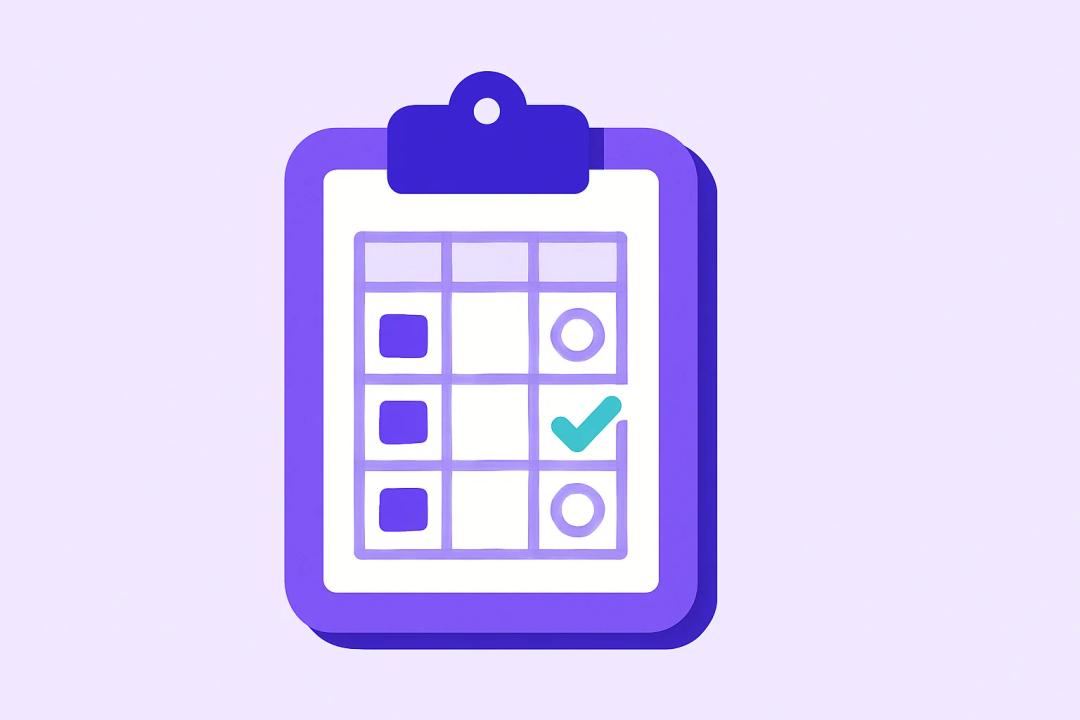
Here are the four questions applied to real business decisions. Map your own work to it.
| Decision | AI decides alone? | Why |
|---|---|---|
| Tag and route an incoming lead | Yes, on a feedback loop | Reversible, data-driven, repetitive |
| Draft a reply to a customer | No, human approves | Customer-facing, judgment-laden |
| Summarize a long document | Yes | Low-stakes, you still read it |
| Set or change a price | No | Consequential, hard to undo |
| Flag an anomaly for review | Yes | It flags, a person acts |
| Answer a billing question live | No, human approves | Personal, accountability on the line |
| Research who to reach out to | Yes | Data-driven, you send the message yourself |
| Decide to refund or deny a claim | No | Value-laden, legal exposure |
Notice the pattern. AI does the research, the sorting, the drafting. The human makes the call that lands on a customer or carries real cost. We wrote more about why that gate matters when things go wrong in who pays when AI gives a customer wrong information.
Why human judgment still matters: AI can't do values
Here is the part people skip. The reason a human stays in the loop is not that AI is weak at the task. Often it is faster and more consistent than you are. The reason is that the hard decisions in a business are not really data problems. They are values problems, and values are exactly what a model does not have.
A model predicts the next likely token based on patterns in its training data. That is a powerful thing. It is also a fundamentally different act from deciding what your business stands for. When you decide to eat the cost on a mistake that was technically the customer's fault, you are not computing the optimal outcome. You are deciding what kind of company you want to be. No amount of training data tells a model what you value, because your values are not in the data. They are in you.
This is why the line holds even as models get better. A smarter model is still a prediction engine. It can tell you what most businesses would do, what the policy says, what the data suggests. It cannot tell you what is right, because "right" is a judgment rooted in values, context, and accountability, and those three things live with a person. When a value-laden call goes wrong, a human can be answerable, can explain the reasoning, can change the policy. Software can do none of that. So the decisions that carry values stay with the people who hold them. That is not a limitation you engineer around. It is the point.
The risks of letting AI decide alone
Full autonomy on the wrong decisions is where projects blow up. Here is the mechanism behind each risk, not just the label.
- Bias at scale. A model inherits whatever skew is in its training data, then applies it uniformly to every case it touches. A human reviewing one decision might catch an unfair pattern. An AI deciding thousands of cases a day bakes the bias into all of them before anyone sees a single one. The speed that makes AI useful is the same speed that makes an unexamined bias systemic.
- Confident error. A model produces fluent, certain-sounding output whether or not it is correct. It has no built-in sense of its own uncertainty on a given case. So a wrong answer arrives with the same confident tone as a right one, which strips away the natural signal that tells a human reviewer to slow down and check. Confident wrong is more dangerous than visibly unsure.
- No accountability. When a bad call hits a customer, "the AI decided" protects no one. A business still owns the outcome legally and reputationally, but the decision was made by a system that cannot be questioned, cannot explain itself in a way that holds up, and cannot be held responsible. You get the liability without the accountable actor. The practical takeaway is simple: keep a person in control of the decisions that carry real consequences.
- Legal and financial exposure. A wrong refund, price, or claim decision is real money and real liability. In regulated contexts the exposure is sharper, because the law assigns responsibility to a person or a company, never to the software. Automate a decision that carries legal weight and you have not removed the risk. You have removed the human who was supposed to catch it.
A legal example: where the gate is non-negotiable
Legal work shows the line in its clearest form, because the cost of a wrong call is concrete and the accountability is assigned by law. Picture an AI tool working through discovery documents in a dispute. Having it surface every document that mentions a key date, cluster them by theme, and draft a first-pass summary is exactly the kind of high-volume, reversible, data-driven work the four questions clear. A junior associate would spend days on it. The AI does it in minutes, and a lawyer still reads the output.
Now move one step over. Deciding which documents are privileged and can be withheld, or deciding the legal strategy the summaries point toward, fails the sort on three counts. It is hard to reverse, it is value-and-judgment-laden, and it carries direct legal exposure. A wrong privilege call can waive protection permanently. So the AI prepares; the lawyer decides and signs. That split is not caution for its own sake. It maps precisely to where accountability legally sits.
A sales example: the same line in GTM work
Go-to-market work runs the same way. An AI agent that researches target accounts, enriches contact data, scores leads by fit, and drafts personalized outreach is doing genuine work on decisions that clear the sort: reversible, data-driven, repetitive. The human still sends the message, which keeps the one decision that carries your brand and your relationship on the human side of the line. Let the agent send unreviewed outreach at volume and you have handed your reputation to a prediction engine. Keep the send gated and you get the leverage without the exposure.
What is the 30% rule for AI?
The 30% rule is a rule of thumb that circulates in AI commentary suggesting AI should handle roughly 30% of a task and a human the rest, keeping the person accountable for the outcome. Treat it as a mindset, not a measurement. The useful idea underneath it is sound: AI excels as a tool for analysis and suggestion, not as an accountable agent. A fixed percentage is less reliable than sorting each decision on its own merits, because the right split depends on the specific call, not an average across a task.
How to apply this to your business
The way forward is a hybrid approach, and it is simpler than it sounds.
- List the decisions in a workflow you want AI to touch.
- Run each one through the four questions. Four yeses means AI can own it; any no means a human approves.
- For anything AI owns, build a feedback loop so you can see what it decided and correct it.
- For anything that gates, make approval a required step, not an optional one.
If you want a starting point for the first build, we laid one out in where to start with AI automation, and we explain the mechanics of agents in what an AI agent actually is. The goal is to become the business that runs leaner without handing over the keys. The busywork runs itself, you approve what matters, and all of it runs on data you own.
Common questions
- Can AI make decisions on its own?
- Yes, software can plan and take actions without step-by-step prompting. The right question is which decisions you let it close. Let it own low-stakes, reversible, data-driven calls on a feedback loop. Keep anything consequential or customer-facing gated behind a human who approves first.
- What is the 30% rule for AI?
- It is a rule of thumb suggesting AI handle roughly 30% of a task and a human the rest, keeping the person accountable. Treat it as a mindset, not a measurement. The more reliable version is to sort each decision by whether it is reversible, data-driven, private, and well-defined.
- Should AI be allowed to make important decisions?
- No, not alone. AI should inform important decisions and never finalize them, because models carry bias, produce confident errors, and cannot be held accountable the way a person can. A human in the loop is who answers for the outcome.
- Can AI make legal or financial decisions alone?
- No. Legal, financial, and medical calls are high-stakes, value-laden, and carry liability assigned by law to a person or company. AI can research, summarize, and draft in those areas, but a qualified human must make and own the final decision before it reaches anyone.
- What is the safest way to add AI to a workflow?
- Ask four questions of each decision: is it reversible, data-driven, private, and well-defined? Four yeses means AI can own it on a feedback loop. Any no means a human approves. Start with one workflow, prove it, then expand.
How this article was made
Written by our content engine, which Ryan Hood built and runs. It published on its own because its checks passed; no person approved it first.
- Says something new: we compared it with the pages already ranking for this questionPassed
- Not a repeat: we compared it with every article already on this sitePassed
- Second opinion: a different AI model reviewed it for accuracyDid not run
- Claims: the engine took out anything it couldn't support before publishingPassed

Written by
The Eldrin AI content engine
The engine analyzes the searches and writes the piece. For clients, the client edits and approves it. On this site it publishes only when every check is clean. Ryan Hood founded Eldrin AI and built the engine.
About Eldrin AI